
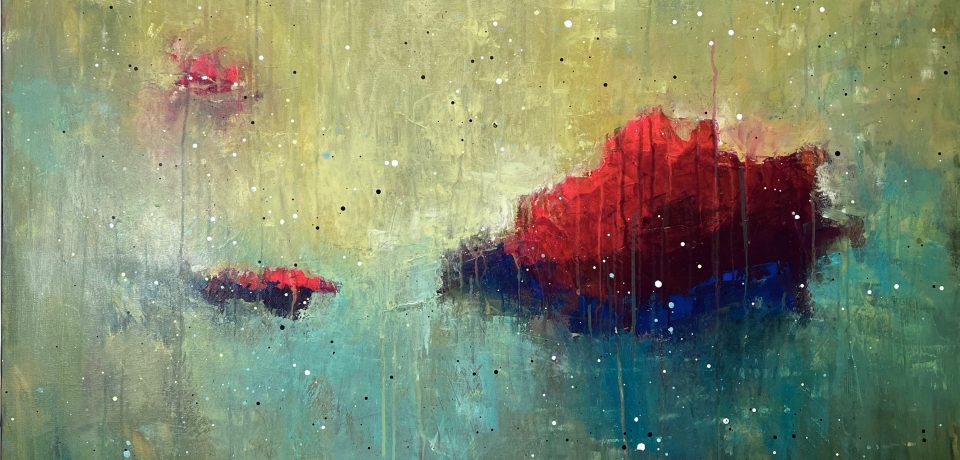
The best art makes you feel something: if the most technically superior artwork doesn’t elicit some kind of emotional response from you, it has failed.
One of the things people ask me sometimes is, “how can you tell if a piece of art is good or bad?”
I remember many years ago, I had a conversation with my dad at a museum or something. He pointed at a painting and asked, “is that a good piece of art?” It caught me off guard and I mumbled something incoherent since this wasn’t something I really put that much thought into yet. But in the years since, I have put a lot of thought into it.
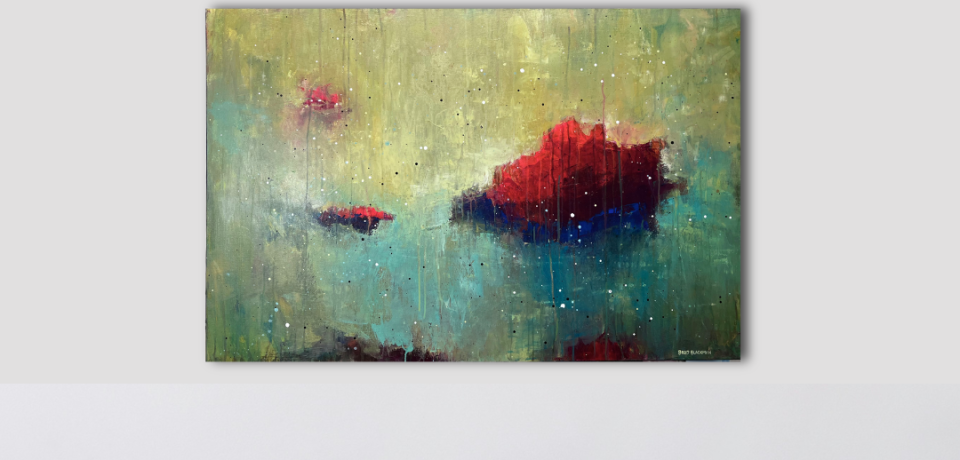
This is where we get into a branch of philosophy known as Aesthetics. In a nutshell, the fundamental question of philosophy is “what is good?” In aesthetics, the basic question is: “what is beautiful?” Of course, what makes it tricky is the subjectivity of it all: isn’t beauty in the eye of the beholder? Since the early 1900s, the art world turned from beauty as its primary focus, so the main question of aesthetics is “what is art?” Is something art simply because someone says it is? This has been a hot topic for the past 100 years, ever since Marcel Duchamp turned a urinal on its back and signed “R. Mutt” on it.
How do you handle something this subjective? Surely there is an objective way to measure the quality of art. Of course, some art is so bad that it’s good. Like that “guilty pleasure” movie you love — the acting is terrible and the plot is predictable, but you love it anyway. I’m sure you can think of a piece of bad art that is in fact, objectively bad. But how can you know for sure?
A checklist for art
When it comes to objectively talking about what makes art good or bad, there are a few requirements. The first two requirements are pretty understandable. The third might be elusive without a certain level of education or awareness, but it is immensely rewarding when we see it.
So here are the three main criteria for judging the quality of a piece of art:
- Craftsmanship or technical skill
- Adherence to principles of design and composition
- Reference to historical, cultural, and/or literary context
Good craftsmanship is pretty easy to recognize, even if you aren’t trained at looking at art. It’s not sloppily made, and it’s not falling apart. We have an inherent appreciation of things that are well made, especially physical objects.
Adherence to design principles and rules of composition is often intuited even if it isn’t consciously identified. Knowing things like line, unity, perspective, figure/ground, and contrast gives you a vocabulary to better appreciate it beyond simply liking or disliking a piece of art. (Which, by the way, is pretty offensive to an artist since it speaks to a level of inexcusable intellectual laziness.) When those things are present in artwork it sparks something in us that our brains really like. We find it satisfying when the design resolves itself in a clever way. Our brains recognize those patterns instinctively, so we appreciate the art intuitively before we find it intellectually satisfying.
The third criterion for judging whether art is good is whether it seems to understand its place in art history. Art doesn’t get made in a vacuum. The Artist should be aware of the art that has come before, whether that is 5 years or 5 centuries ago. Appreciating art hinges on an awareness of the context in which it is created. This context can be anything from current affairs such as political and cultural events or scientific discoveries or references to great literature or echoing the Masters. (There’s a fantastic video series out there called “Everything is a Remix” that does a deep dive into this idea.)
This checks all the boxes, but…
Now, have you ever seen art that “checks all the boxes,” but it just falls flat? It is so academic, so technically impressive, has good composition and color, and it refers to something in literature or “quotes” the masters in some way, but it feels trite and derivative. It feels unoriginal or that somebody is trying to make a buck and pass itself off as being sincere when it isn’t. I think a lot of us can detect that a mile away and it turns us off. It feels gross.
Emotional connection
On the other hand, I’ve seen art that “breaks the rules” become elevated to rockstar status. I’ve seen art made with poor materials like housepaint, and the compositions are rudimentary and unrefined, but the “soul” of the art speaks to me on a visceral level. You can tell that there is something important in the work of Howard Finster or Jean-Michel Basquiat. Their artwork is raw and not very “pretty” but the emotional impact is undeniable.

Howard Finster
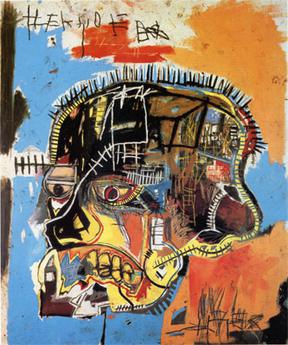
This brings me to what I think is one of the most important factors for a piece of art to be successful: it has to make an emotional connection with the viewer. The best art makes you feel something: if the most technically superior artwork doesn’t elicit some kind of emotional response from you, it has failed. I think this is what we mean when we say a piece of art or music has “soul”. And I think this is why so many people are turned off by A.I. “art” because it lacks soul and emotional depth. Sometimes A.I. knows the rules all too well that it becomes predictable, and it falls flat because there’s no lived experience on the other side of it. Thoreau once said “How vain it is to sit down to write when you have not stood up to live.”
“How vain it is to sit down to write when you have not stood up to live.” — Henry David Thoreau
That’s why art that “breaks the rules” can work if it has a profound emotional impact.
I’ve also seen art that is technically sound and compositionally pleasing and may elicit a sublime emotional response, yet it reveals something sinister. I’m thinking of the awe-inspiring architecture of the Italian Fascist regime that masks deep cruelty and racism. It’s gorgeous and follows all the rules, and I think that’s kind of the point.
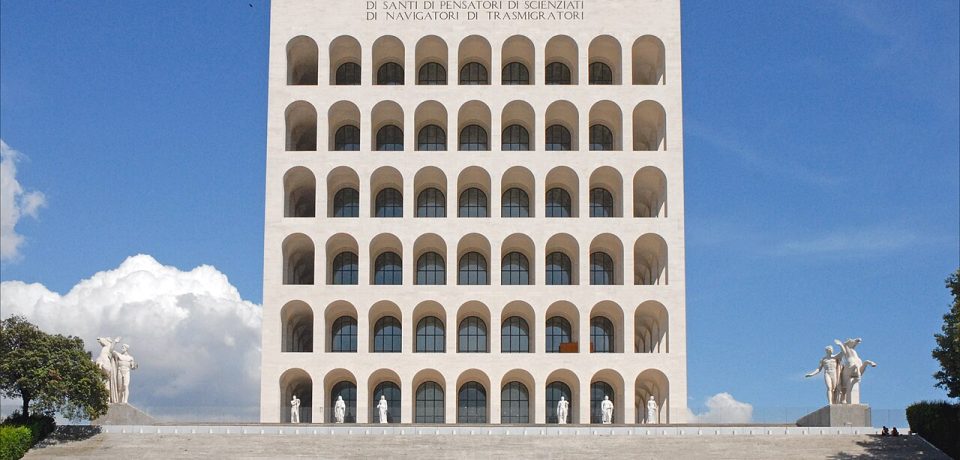
And this is why the study of aesthetics matters. It forces you to go deeper than the surface of a piece of artwork and start a discussion about values and ask what is really being expressed by what you see. This is where transformation takes place. An aesthetic experience doesn’t leave you unchanged. That’s not to say every single brush stroke “means” something, but there is purpose behind everything that is created. Even if that purpose is to be whimsical and make someone smile.
The feeling I’m chasing
When I make art, I want to make you feel like you’ve just woken up from a dream, and you’re trying to remember what that dream was, but you can’t quite place it. Or I’m trying to capture the sensation of climbing to the top of a mountain and feeling the cold wind on your skin, but you are proud of yourself for making the climb. Other times, I’m trying to convey a sense of spirituality, pointing at something just beyond the world we know, something very close, yet out of reach.
So those are the objectives I see as the criteria for good art: it’s well-made, it makes use of design and composition principles, and it understands its place in art history. But the most important factor is that it makes an emotional connection with the viewer.
If you also think art is supposed to make you feel something — or if you disagree! — please leave a comment and be sure to share this with all your friends who love the arts as well. I hope to hear from you soon.
